Best AI Code Quality Tools for Developers in 2026

TL;DR overview
- AI code quality refers to using artificial intelligence to analyze, evaluate, and improve the overall health and safety of a codebase.
- The rapid acceleration of software development driven by AI coding assistants introduces subtle logic flaws, technical debt, and new security vulnerabilities.
- Leading AI code quality tools like SonarQube combine deterministic static analysis with generative AI to validate code and catch errors human reviewers miss.
- Teams can scale securely by integrating these intelligent tools into IDEs, pull requests, and CI/CD pipelines to enforce automated quality gates.
Why AI Code Quality Is Important in 2026
In 2026, the volume and speed of software development have surged, driven largely by widespread adoption of AI coding assistants. Developers are producing more code than ever, much of it generated or accelerated by AI — which introduces new risks such as subtle logic flaws, non-idiomatic patterns, and security vulnerabilities that traditional linting or manual reviews often miss. Modern codebases are simply too large, complex, and fast-moving for human reviewers alone. AI-powered code quality tools provide continuous analysis, deeper context, and consistent enforcement of standards, helping teams maintain quality without slowing their delivery pace.
At the same time, security threats and compliance requirements have grown more demanding. Organizations need reliable, automated systems to detect risky patterns, validate AI-generated code, minimize technical debt, and ensure that only safe, maintainable changes reach production. With distributed teams working across languages, frameworks, and time zones, AI tools offer a unified way to uphold best practices and provide actionable, natural-language guidance. Ultimately, AI-driven quality is no longer optional — it’s essential for building secure, scalable, and resilient software in today’s accelerated development landscape.
What is AI Code Quality?
AI Code Quality refers to the use of artificial intelligence to analyze, evaluate, and improve the overall health of software code. Unlike traditional static analysis tools that rely solely on predefined rules, AI-driven systems understand context, patterns, and intent within a codebase. They can reason across files, identify subtle logic errors, detect emerging security vulnerabilities, and provide human-like explanations of issues. AI Code Quality tools operate within IDEs, pull requests, and CI/CD pipelines to give developers real-time, intelligent feedback that extends far beyond linting or simple style checks.
In practice, AI Code Quality combines deterministic analysis (rules, standards, compliance checks) with machine learning and generative AI. This hybrid approach enables tools to not only spot problems but also suggest fixes, evaluate the safety of AI-generated code, predict risky changes before they cause issues, and help teams maintain consistent coding standards at scale. As software systems grow more complex and development velocity increases, AI Code Quality ensures that teams can ship reliable, secure, and maintainable software with confidence.
The Top 5 AI Code Quality Tools for 2026
Below are the best AI code quality tools developers should consider in 2026, ranked by capability, reliability, depth of analysis, and overall impact on modern development teams.
1. SonarQube – Comprehensive Code Quality & Security Champion

SonarQube remains the industry leader for automated code quality and security analysis, enhanced in 2026 with AI-focused capabilities. It combines powerful static analysis with contextual AI review to detect bugs, code smells, vulnerabilities, and quality issues across large, multi-language codebases. SonarQube also includes AI Code Assurance features that help teams validate and enforce standards in code generated by AI assistants.
Key Features:
- Deep static analysis for bugs, security issues, and maintainability.
- AI-enhanced code review and fix suggestions.
- AI Code Assurance workflow to validate AI-generated code.
- Support for 35+ programming languages.
- Seamless integration with CI/CD tooling and IDEs.
- Customizable quality gates, compliance checks, and security standards.
2. Zencoder – AI-Powered Deep Review & Contextual Insights
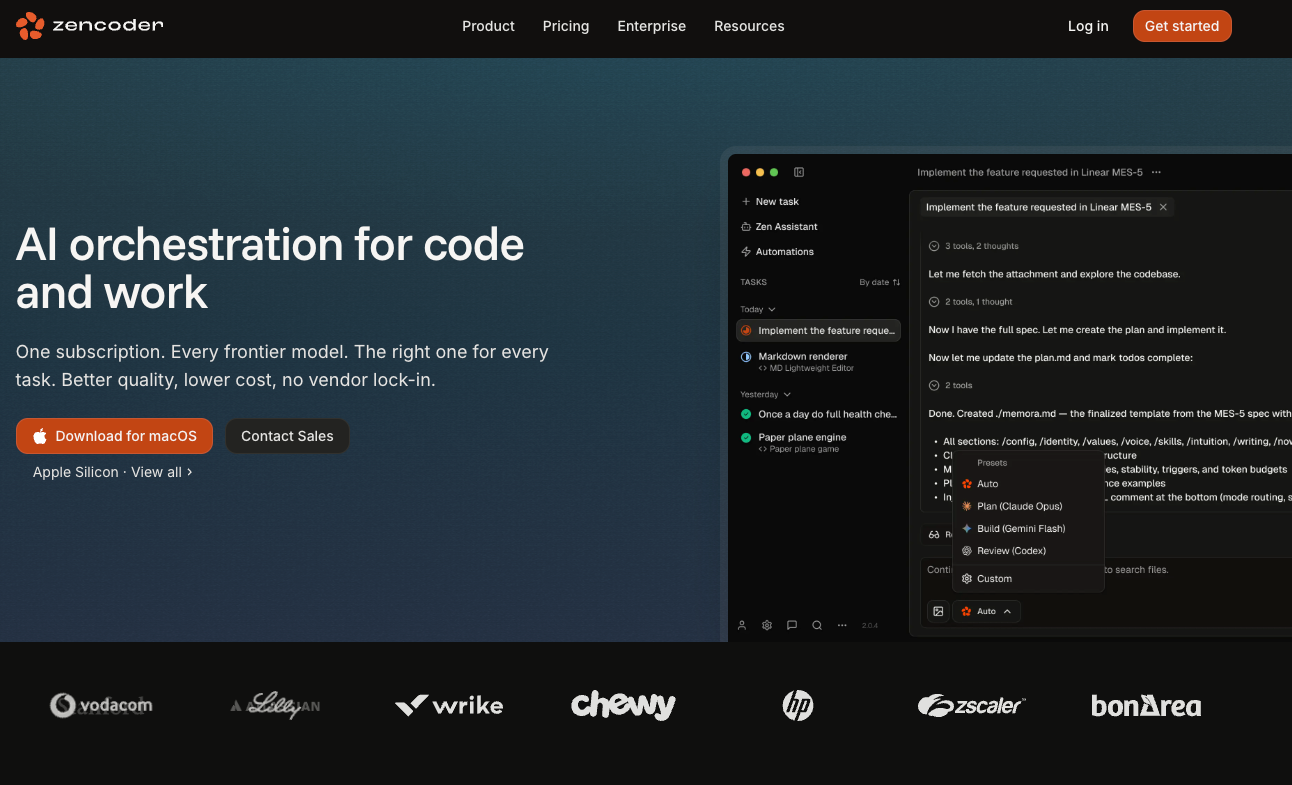
Zencoder focuses on full-context AI analysis of codebases, offering actionable feedback on code quality, structure, and tests. It goes beyond simple diffs to review across files and modules, giving teams a broader understanding of issues and suggested improvements.
Key Features:
- AI code review agent with context-aware feedback.
- Multi-repo search and comprehensive repo comprehension.
- IDE support including VS Code and JetBrains.
- Optional AI testing and auto-test generation tools.
- Flexible pricing tiers for teams of all sizes.
3. CodeRabbit – Fast AI Pull Request Reviews
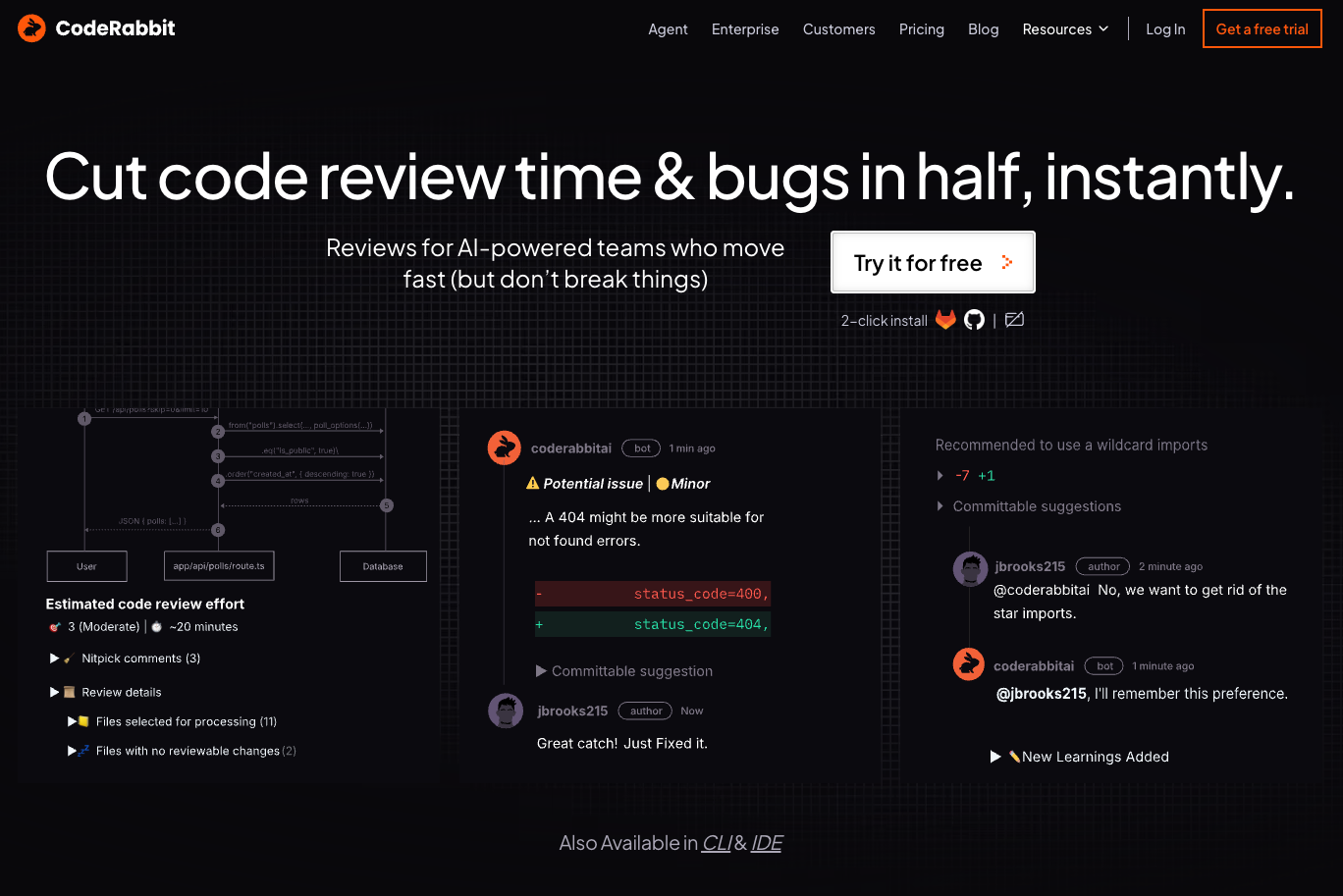
CodeRabbit specializes in AI-driven pull request analysis, giving developers quick summaries and contextual suggestions right inside Git workflows. It’s designed to accelerate code reviews and reduce repetitive manual feedback.
Key Features:
- Line-by-line AI review of changes.
- One-click auto-fix suggestions.
- GitHub/GitLab integrations and IDE extension.
- Contextual comments and PR summaries.
4. Snyk Code – Security-Centric AI Scanning
Snyk Code brings AI-augmented static application security testing (SAST) into developer workflows, helping teams find and fix vulnerabilities early. While heavily security-oriented, it also contributes to code quality by highlighting risky patterns and suggesting safer alternatives.
Key Features:
- Real-time vulnerability scanning in IDEs and PRs.
- Auto-fix suggestions for security issues.
- Comprehensive policy enforcement across teams.
- Integration with CI/CD and source control platforms.
5. DeepSource – DevSecOps-Friendly Quality Automation
DeepSource focuses on continuous quality and security checks in development pipelines. It blends automated static analysis with AI-assisted autofixes and baseline filtering to reduce noise, making it effective for teams that want quality gates at every step of CI/CD.
Key Features:
- Automated issue detection in PRs and branches.
- Autofix generation for common problems.
- Quality and security policy enforcement.
- Integration with GitHub, GitLab, Bitbucket, and other DevOps platforms.
Choosing the Right Tool for AI Code Quality
Selecting the right AI code quality tool in 2026 depends on balancing your team’s workflow, codebase complexity, and governance needs. Start by evaluating where quality feedback is most valuable for your developers: inside the IDE, during pull requests, or at the CI/CD stage. Tools that integrate seamlessly into your existing pipelines will provide faster adoption and more consistent results. It’s also important to assess the tool’s balance between deterministic static analysis and AI-driven insights. While generative AI reviewers can provide rich context and explanations, they should complement — not replace — reliable rule-based detection for security, maintainability, and compliance.
You should also consider scalability, transparency, and noise reduction. The best tools handle large monorepos without performance issues, offer clear and explainable feedback, and minimize false positives so developers can trust what they see. Look for solutions that provide governance features such as quality gates, security policy enforcement, and audit reporting if your organization requires compliance or enterprise-level oversight. Finally, evaluate each tool’s approach to reviewing AI-generated code — a growing necessity as teams rely more heavily on coding assistants. The ideal platform empowers developers with actionable insights while ensuring your codebase remains secure, maintainable, and consistent as it evolves.
FAQs
1. What is AI code quality, and how is it different from traditional static analysis?
AI code quality combines rule-based static analysis with AI-driven reasoning to detect deeper issues in code. Unlike traditional tools that rely solely on predefined patterns, AI can understand context, evaluate logic across files, explain issues in natural language, and identify risks introduced by AI-generated code. This hybrid approach results in more accurate, actionable insights.
2. Why do developers need AI code quality tools in 2026?
In 2026, developers are shipping code faster and relying heavily on AI assistants. This increases productivity but also introduces new risks, including subtle bugs, insecure patterns, and inconsistent styles. AI code quality tools provide continuous, scalable review that catches issues early, enforces standards automatically, and helps teams maintain high-quality software without slowing development.
3. Are AI code quality tools safe to use with proprietary or sensitive codebases?
Most enterprise-grade tools offer on-premise deployment, encrypted data handling, or self-hosted options to protect sensitive code. Always review a vendor’s data retention policies, hosting model, and compliance certifications to ensure the tool aligns with your security requirements.
4. How should teams choose the best AI code quality tool for their workflow?
Teams should prioritize tools that integrate naturally with their IDEs, version control systems, and CI/CD pipelines. They should also evaluate support for their languages, the accuracy of issue detection, AI explainability, noise reduction, and governance features such as quality gates or security checks. The best tool is one that fits smoothly into daily development without adding friction.
