Best Application Security Tools in 2026

TL;DR overview
- Application security consists of the practices, tools, and processes used to identify, prevent, and protect software applications from vulnerabilities and attacks across the entire software development lifecycle (SDLC).
- Leading application security tools in 2026, such as SonarQube, offer developer-friendly platforms that merge static application security testing (SAST), software composition analysis (SCA), and quality governance to improve code quality and security.
- Modern AppSec programs emphasize a shift-left security approach, integrating automated testing directly into IDEs and CI/CD pipelines so developers can remediate vulnerabilities like injection flaws and broken access control early.
- Utilizing a layered testing methodology helps teams generate Software Bills of Materials (SBOMs), ensure secure configurations, and maintain strict compliance with industry standards like the OWASP Top 10 and CWE.
Why Application Security is Important in 2026
In 2026, application security is no longer a specialized concern reserved for security teams—it is a core requirement of modern software development. Applications now power critical business processes across cloud computing environments, APIs, microservices, and mobile platforms, dramatically expanding the attack surface. Threat actors increasingly exploit common weaknesses such as broken access control, injection flaws, cryptographic failures, security misconfiguration, and vulnerable or outdated components, many of which are consistently highlighted in the OWASP Top 10. As organizations adopt faster release cycles and complex supply chains built on open-source software, embedding security throughout the secure software development life cycle (SDLC) has become essential to protecting sensitive data, maintaining availability, and preserving trust.
At the same time, regulatory pressure and business risk have intensified. Standards and frameworks such as CWE, OWASP ASVS, and NIST increasingly expect demonstrable controls like static application security testing (SAST), dynamic application security testing (DAST), software composition analysis (SCA), security logging and monitoring, and secure-by-default design. Modern application security programs emphasize shift-left security, enabling developers to address vulnerabilities during design review, threat modeling, code review, and continuous integration rather than after deployment. In 2026, organizations that treat application security as a foundational engineering discipline—rather than a reactive checkbox—are far better positioned to reduce exploitation risk, prevent software and data integrity failures, and deliver secure, resilient applications at scale.
What is Application Security?
Application security refers to the practices, tools, and processes used to protect software applications from vulnerabilities and attacks throughout the entire software development lifecycle. It focuses on identifying and preventing security weaknesses in source code, dependencies, and runtime behavior before they can be exploited. Common application security concerns include injection flaws, insecure authentication and access control, improper input validation, sensitive data exposure, and logic errors that can lead to privilege escalation or data breaches. Modern application security emphasizes secure coding, early static analysis, and continuous testing to reduce risk as software evolves.
In 2026, application security is deeply integrated into developer workflows and cloud-native environments. Rather than relying solely on late-stage testing, organizations adopt shift-left security, embedding security checks directly into IDEs, CI/CD pipelines, and pull requests. Advanced tools now combine deterministic rules with AI-assisted analysis to improve vulnerability detection, reduce false positives, and guide developers through effective remediation, debugging, code refactoring, and code cleanup. As applications increasingly run in distributed and cloud environments, application security also overlaps with cloud computing security, ensuring that both code and configuration are resilient against modern threats.
Top Application Security Tools in 2026
Application security has evolved rapidly over the last few years. In 2026, teams are no longer choosing tools purely based on vulnerability coverage—they expect developer-first workflows, AI-assisted remediation, and cloud‑native scalability that supports modern software delivery.
This guide reviews the best application security tools in 2026, focusing on platforms that help engineering teams prevent security flaws, improve code quality and security, and ship software faster without sacrificing safety.
1. SonarQube
Best for holistic code quality and application security
SonarQube leads the pack by integrating secure coding checks, static application security testing (SAST), software composition analysis (SCA), and quality governance into one developer-friendly platform.
Key Features
- Advanced SAST: Detect code vulnerabilities and security hotspots early in development.
- Taint & Data-Flow Analysis: Finds complex issues like injection risks across code paths.
- Secrets Detection: Finds hard-coded credentials, tokens, and sensitive data.
- Infrastructure as Code (IaC) Scanning: Ensures secure configurations for cloud environments.
- Software Composition Analysis (SCA): Finds known third-party vulnerabilities (CVEs), manages licenses and policies.
- SBOM Generation & Compliance: Produces Software Bill of Materials, supports standards like OWASP Top 10 & CWE.
- Dashboards & Reports: Visual insights into trends, severity, and remediation guidance.
- IDE & CI/CD Integration: Feedback directly in developer workflows for shift-left security.
2. Checkmarx One
Checkmarx One provides an integrated AppSec suite with powerful scanning engines and application security posture management (ASPM) to streamline risk prioritization.
Key Features
- Static Application Security Testing (SAST): Deep code scanning for vulnerabilities throughout the SDLC.
- Dynamic Application Security Testing (DAST): Runtime analysis of live applications and APIs.
- Software Composition Analysis (SCA): Finds open-source and third-party risks.
- API Security Testing: Focused scanning of APIs and related endpoints.
- IaC & Cloud Integration: Detects misconfigurations and cloud risk vectors.
3. Burp Suite
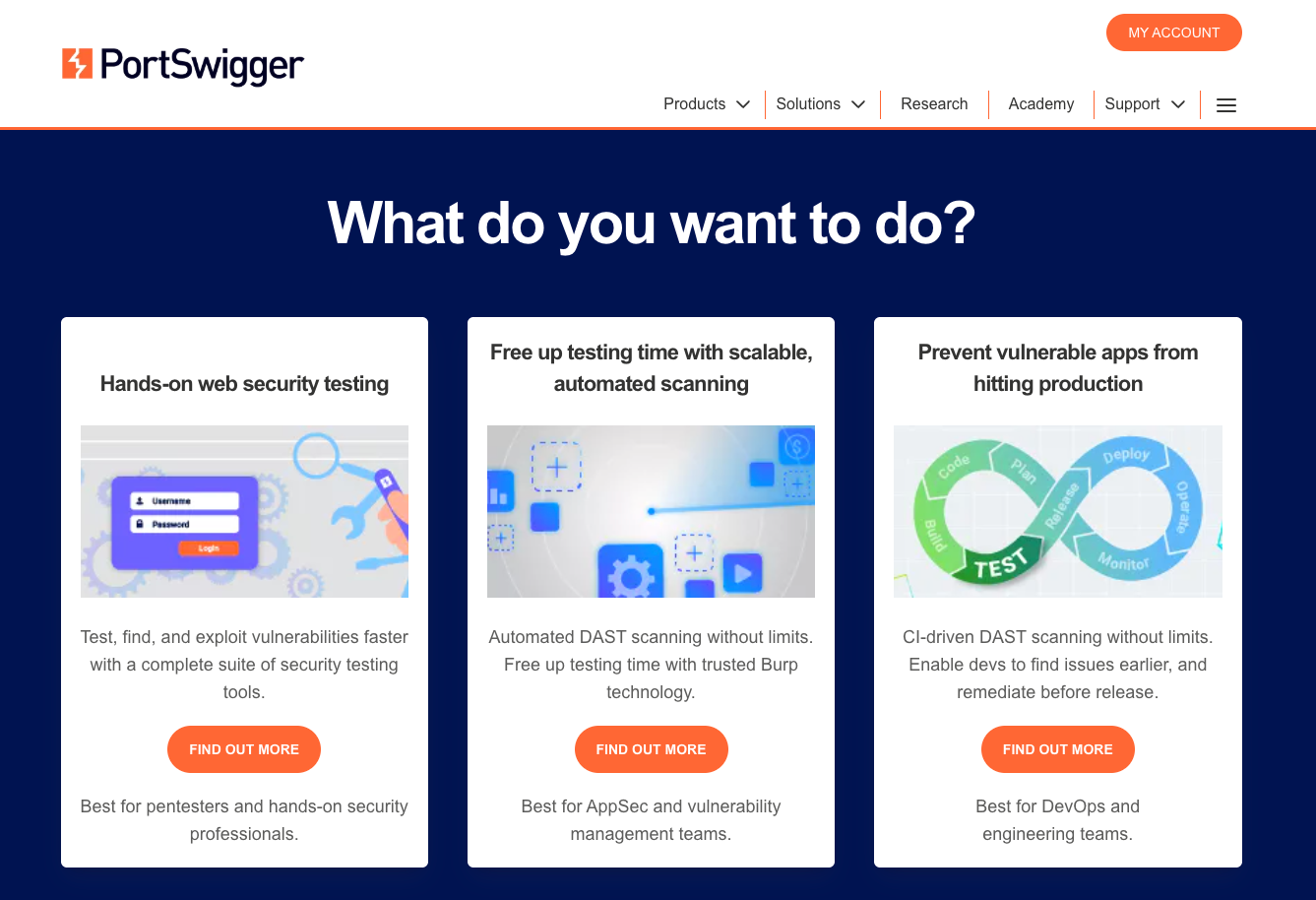
A staple in web security, Burp Suite blends automated scanning with manual tools to uncover deep logic, authentication, and runtime vulnerabilities.
Key Features
- Burp Proxy: Intercept and analyze HTTP/S traffic in real time.
- Burp Scanner: Automated scanning of web apps for vulnerabilities.
- Intruder & Repeater Tools: Detailed manual testing and hypothesis exploration.
- Collaborator: Simulates out-of-band interactions to identify blind vulnerabilities.
- Plugin & Extension Support: Customize testing workflows and rules.
- Comprehensive Reporting: Categorized results with remediation guidance.
4. OWASP ZAP
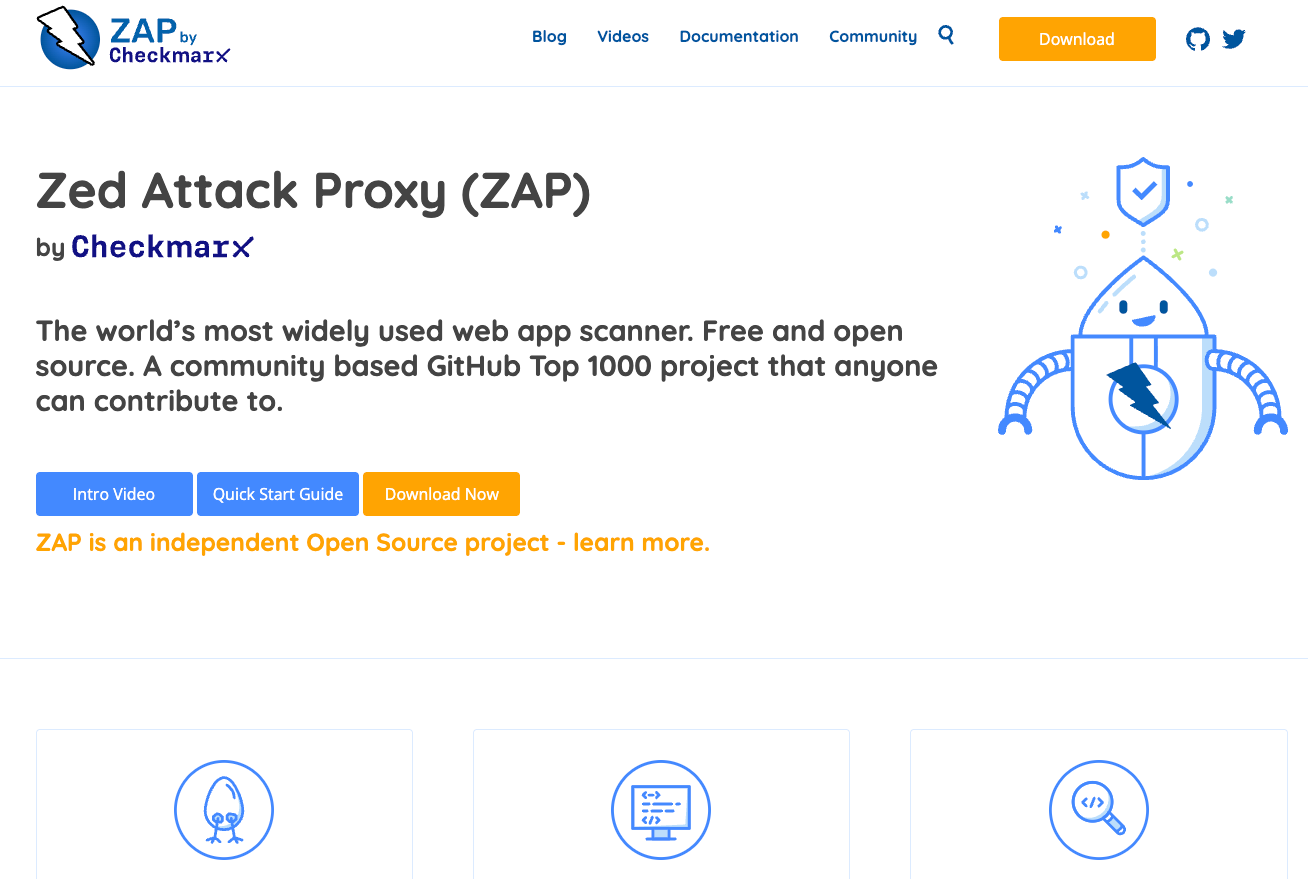
ZAP (Zed Attack Proxy) offers robust DAST and interactive testing capabilities for web applications with flexible scripting and plugin support.
Key Features
- Intercepting Proxy Server: Monitor and manipulate traffic.
- Automated & Passive Scanners: Find runtime vulnerabilities with automation.
- Web Crawlers (Traditional & AJAX): Explore application paths for deeper testing.
- Fuzzer: Probe inputs for unexpected behavior.
- WebSocket & Script Support: Advanced interaction testing.
- Plugin Marketplace: Extend capabilities via community plugins.
5. Black Duck
Black Duck specializes in tracking open-source libraries and supply chain risk within applications.
Key Features
- Open-Source Risk Detection: Identifies vulnerabilities in third-party dependencies.
- License & Policy Management: Enforce open-source usage policies.
- SBOM & Compliance: Generates SBOMs and compliance evidence.
- Automated Scanning: Checks open-source software across the SDLC.
Choosing the Right Tool for Your Application Security
Choosing the right application security tool in 2026 depends on how well it fits your development workflows, technology stack, and risk profile. No single tool addresses every threat across the secure software development life cycle (SDLC), which is why most mature AppSec programs combine multiple capabilities. At a minimum, teams should look for strong static application security testing (SAST) to catch vulnerabilities and insecure coding patterns early, complemented by software composition analysis (SCA) to manage open-source dependencies and reduce exposure to vulnerable or outdated components. For applications exposed to the internet, dynamic application security testing (DAST) and API security testing are critical for identifying runtime issues such as broken authentication, security misconfiguration, and server-side request forgery (SSRF).
Equally important is how well a tool supports developers and scales with modern delivery models. Effective application security tools integrate directly into IDEs and CI/CD pipelines to enable shift-left security, provide clear remediation guidance, and reduce false positives that slow teams down. Support for threat modeling, security logging and monitoring, secure-by-design principles, and compliance reporting against standards like OWASP Top 10, CWE, and OWASP ASVS can further strengthen decision-making. Ultimately, the right tool is one that aligns security, development, and business goals—helping teams build secure, high-quality applications without sacrificing speed or innovation.
FAQs
1. What is an application security (AppSec) tool?
An application security tool helps identify, prioritize, and remediate vulnerabilities in software throughout the secure software development life cycle (SDLC). These tools address risks such as injection flaws, broken access control, cryptographic failures, and security misconfiguration using techniques like static application security testing (SAST), dynamic application security testing (DAST), interactive application security testing (IAST), and software composition analysis (SCA).
2. Why is application security more critical in 2026 than before?
In 2026, applications are more distributed, cloud-native, and API-driven than ever, significantly increasing the attack surface. The widespread use of open-source software, microservices, and continuous deployment makes applications more susceptible to software and data integrity failures and supply chain attacks. Modern AppSec tools help teams detect vulnerabilities early, align with standards like the OWASP Top 10, and reduce the risk of exploitation before issues reach production.
3. What types of application security testing should I use?
Most organizations benefit from a layered approach. SAST is essential for identifying vulnerabilities during development, while SCA manages risks from third-party dependencies. DAST and API security testing uncover runtime issues in deployed applications, and IAST or runtime application self-protection (RASP) adds visibility and protection in production. Combining these techniques provides broader coverage across the SDLC.
4. How do application security tools fit into DevSecOps?
Application security tools are a core component of DevSecOps, enabling shift-left security by integrating directly into IDEs, version control systems, and CI/CD pipelines. This allows developers to address security issues during design review, coding, and code review rather than after deployment. Automated security checks, clear remediation guidance, and security logging and monitoring help teams balance speed with risk reduction.
5. How do I choose the best application security tool for my organization?
The best tool depends on your application architecture, compliance requirements, and team maturity. Look for solutions that support your languages and frameworks, integrate seamlessly into your workflows, and map findings to recognized standards such as CWE, OWASP ASVS, and the OWASP Top 10. Tools that combine strong detection capabilities with low false positives and developer-friendly remediation guidance tend to deliver the greatest long-term value.
