Best JavaScript Static Code Analysis Tools in 2026

TL;DR overview
- JavaScript static code analysis examines source code without executing it to detect bugs, code quality defects, and security vulnerabilities early in the development lifecycle.
- Implementing this automated oversight catches logic flaws, enforces consistent coding standards, and highlights areas of technical debt before they become costly.
- Leading static analysis tools like SonarQube, ESLint, and Snyk Code combine traditional quality checks with advanced security capabilities (SAST) and AI-driven automation.
- Integrating these solutions into IDEs and CI/CD pipelines ensures continuous inspection, providing teams with real-time feedback and actionable remediation guidance.
Why JavaScript Static Code Analysis Is Important in 2026
In 2026, JavaScript powers large-scale front-end frameworks, backend services, cross-platform applications, and serverless architectures—making codebases more complex and interconnected than ever. With this growth comes an increased risk of bugs, inconsistent patterns, and maintainability issues that can quickly multiply across fast-moving teams. Static code analysis has become essential for keeping this complexity under control. It provides automated oversight that catches defects early, enforces coding standards, and highlights areas of technical debt before they become costly problems. As development cycles accelerate, static analysis acts as a reliable safeguard that ensures every change meets baseline expectations for code quality and reliability.
At the same time, JavaScript remains a frequent target in the security landscape, and organizations face growing pressure to protect their applications from vulnerabilities, supply-chain risks, and insecure coding practices. Static code analysis plays a critical role in meeting these demands by detecting security issues early in the development lifecycle and providing actionable guidance to developers. Combined with modern editor integrations and continuous delivery workflows, static analysis delivers real-time feedback that improves productivity while strengthening application resilience. In 2026, teams that rely on JavaScript simply cannot afford to ship code without the safety net and consistency that static analysis provides.
What is JavaScript Static Code Analysis?
JavaScript static code analysis is the process of examining source code without executing it to identify bugs, code quality issues, security vulnerabilities, and maintainability concerns. Using rule-based or semantic analysis, static analysis tools parse JavaScript into an abstract syntax tree (AST) and apply a broad set of checks—ranging from simple style violations to deep logic flaws and security risks. Because this analysis happens before the code runs, it helps developers detect problems early in the development lifecycle, often directly within their editor or as part of automated CI pipelines.
Modern static analysis goes far beyond traditional linting. Advanced tools analyze data flows, track how values move through the program, and identify complex issues such as untrusted inputs, unreachable code paths, or risky APIs. Many solutions also surface maintainability insights, highlight duplicated logic, and evaluate the long-term health of a codebase. By combining early detection with actionable guidance, JavaScript static code analysis empowers teams to write quality, safer, and more reliable code—while reducing the time and cost associated with fixing issues later in the development process.
The Top 5 JavaScript Static Code Analysis Tools for 2026
The market for JavaScript static code analysis tools has converged, with the most successful platforms combining traditional code quality features with advanced security capabilities (SAST) and AI-driven automation.
1. SonarQube — The Gold Standard for Code Quality & Security

SonarQube provides comprehensive static analysis with an emphasis on code quality and security. It detects bugs, code smells, duplications, and vulnerabilities, offering actionable remediation guidance. SonarQube is designed for professional teams and scales across large codebases, providing dashboards, quality gates, and continuous inspection when integrated into CI/CD pipelines.
Key Features:
- Detects bugs, vulnerabilities, and code smells
- Rich dashboards and long-term project health metrics
- Quality gates to enforce standards before merging
- Support for JavaScript and TypeScript
- CI/CD integration for automated analysis
- Pull request decoration and developer guidance
2. ESLint — The Essential Linting Tool
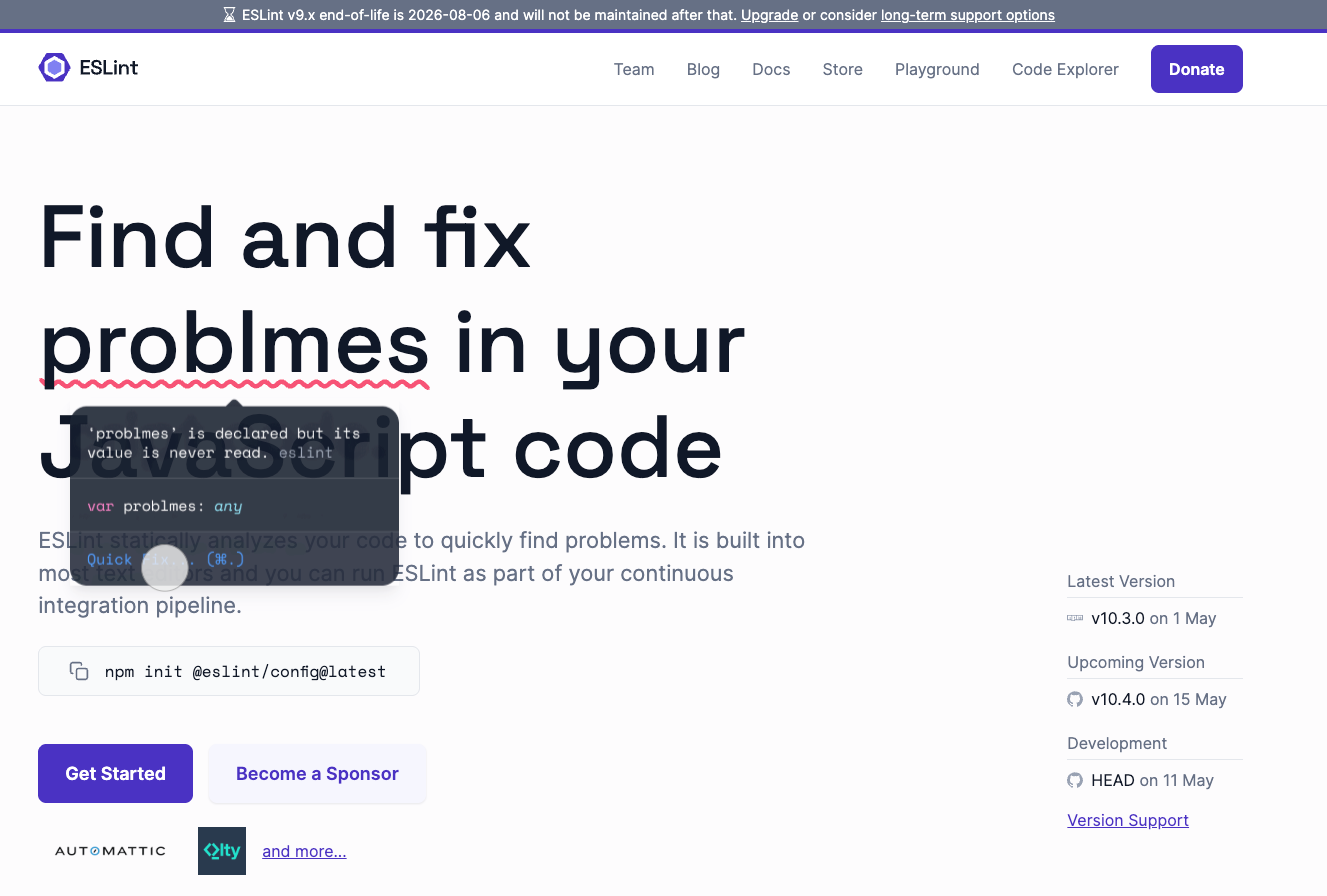
ESLint remains the most widely used linter in the JavaScript ecosystem. Its rule-driven approach helps teams enforce syntax, style, and architectural standards. With thousands of plugins (React, Vue, TypeScript), ESLint is highly customizable and fast.
Key Features
- Configurable rule sets
- Large plugin ecosystem
- Auto-fixing for many issues
- Easy integration with most editors and CI pipelines
3. Snyk Code — Security-Focused Static Analysis
Snyk Code provides modern SAST capabilities, scanning JavaScript for vulnerabilities in real time. It integrates into IDEs and repositories to give developers fast feedback and remediation tips.
Key Features
- Accurate vulnerability detection
- IDE and PR annotations
- Security-driven analysis powered by AI
4. Semgrep — Lightweight Pattern-Based Analysis
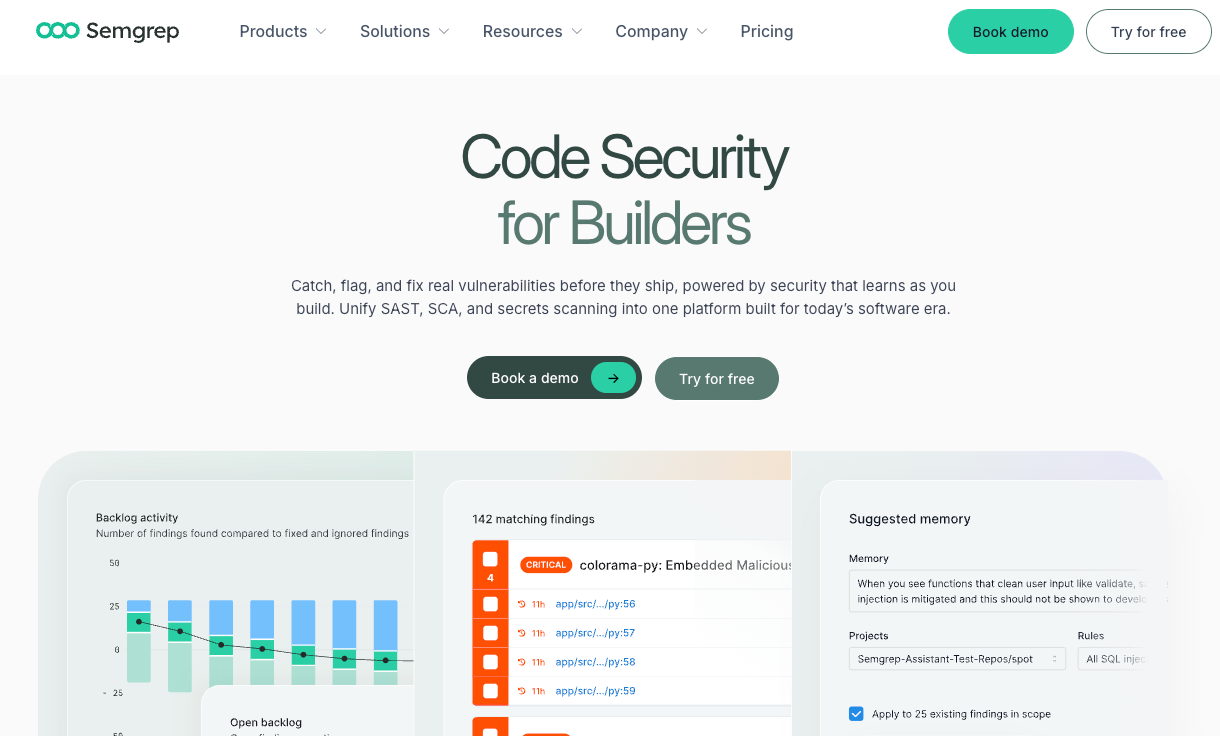
Semgrep stands out for customizability. Developers can write simple, readable rules to detect specific code patterns or enforce team-level guidelines.
Key Features
- Custom rules with easy syntax
- Very fast local scanning
- Useful for both security and quality checks
5. Code Climate / Codacy — Multi-Repo Quality Reporting
Platforms like Code Climate and Codacy provide code quality dashboards, maintainability metrics, and automated PR feedback across many repositories.
Key Features
- Quality trend tracking
- Multi-language support
- GitHub/GitLab/Bitbucket integration
Choosing the Right Tool for Your JavaScript Project
Selecting the right static analysis tool for your JavaScript project depends on your team’s goals, development workflow, and the level of depth you need. For day-to-day linting and enforcing coding standards, tools like ESLint offer flexibility, speed, and a large ecosystem of plugins for frameworks like React, Vue, and TypeScript. If your focus includes robust security checks or enforcing organization-wide quality standards, platforms such as SonarQube and SonarQube Cloud provide deeper semantic analysis, integrated quality gates, and long-term maintainability insights that scale across teams and repositories. Security-driven projects may benefit from specialized scanners like Snyk Code or the pattern-based flexibility of Semgrep, especially when custom rules are needed.
Beyond individual features, it’s important to consider how well a tool integrates into your existing workflow. Look for solutions that support your CI/CD pipelines, provide real-time feedback in your IDE through tools like SonarQube for IDE, and offer clear, actionable results that developers can use without slowing down delivery. For organizations managing multiple codebases or distributed teams, centralized dashboards and trend reporting can provide valuable visibility into code health over time. Ultimately, the right tool is one that aligns with your project’s complexity, your team’s maturity, and your long-term quality and security expectations—helping you maintain a clean, reliable JavaScript codebase as your application evolves.
FAQs
1. What is the difference between linting and static code analysis?
Linting focuses primarily on style rules, formatting, and simple code mistakes. Static code analysis, on the other hand, goes deeper—identifying bugs, security vulnerabilities, maintainability issues, and complex logic flaws. Tools like ESLint provide excellent linting, while platforms such as SonarQube offer full-spectrum analysis across quality and security dimensions.
2. Do I need static code analysis if my team already does code reviews?
Yes. Static analysis complements code reviews by catching issues automatically and consistently, freeing human reviewers to focus on architecture, design, and business logic. It acts as an early-warning system, reducing cognitive load and helping reviewers avoid missing subtle bugs or security risks.
3. Can static analysis slow down my development process?
Not when used effectively. Modern tools integrate directly into IDEs and CI pipelines, providing real-time feedback without blocking developers. Solutions like SonarQube for IDE catch issues as you write code, reducing rework later. Automated quality gates ensure that code meets standards while keeping delivery fast and predictable.
4. Which static analysis tool is best for JavaScript in 2026?
It depends on your needs. SonarQube and SonarQube Cloud provide the most comprehensive code quality and security analysis, ideal for organizations and teams that require depth and scalability. ESLint excels at rule-based linting, Snyk Code focuses on security scanning, and Semgrep is great for custom pattern detection. Many teams combine multiple tools for full coverage.
5. Does static code analysis work with modern frameworks like React, Vue, and Next.js?
Absolutely. Most tools—including ESLint, SonarQube, and Semgrep—fully support modern JavaScript and TypeScript ecosystems. They can analyze JSX, TSX, and framework-specific patterns, making them suitable for everything from single-page applications to large-scale full-stack JavaScript platforms.
