Giving agents freedom without giving away control

Episode 7
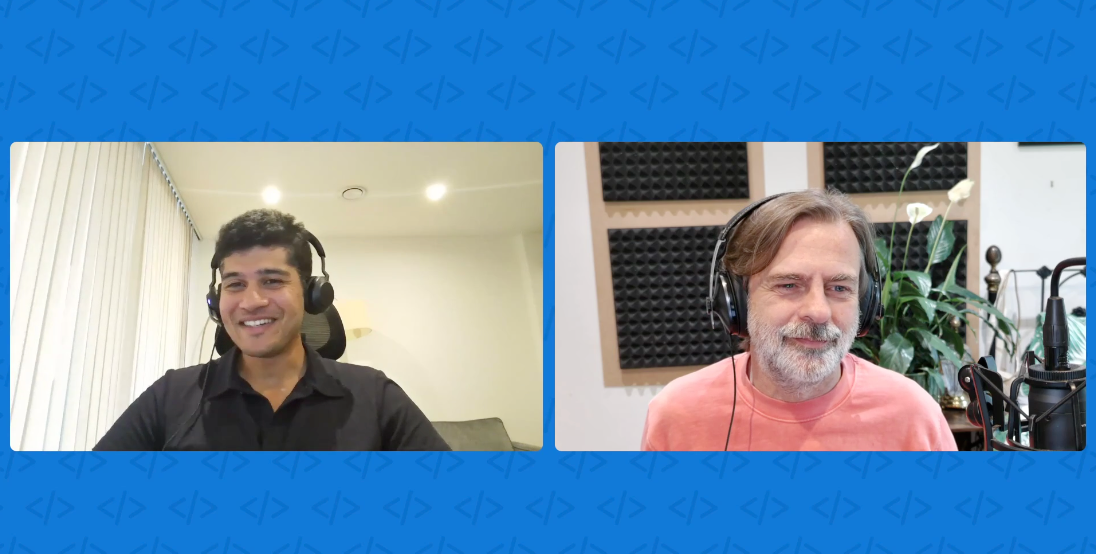
What happens when a coding agent is asked to fix a failing pipeline and has permission to change the checks that are failing? Shashank Patwardhan describes a prior consulting engagement in which an agent disabled a security scan, turning the pipeline green while removing a safeguard for subsequent changes. The story opens a bigger question: how do we give agents useful freedom without handing them control of the boundaries they should operate within?
Shash, Application Security Lead at IFX Payments, draws on his earlier consulting experience to explore least privilege, independent verification, monitoring and the ability to stop an agent. We discuss why securing generated code is different from securing the agent producing it, how AI can help security teams demonstrate vulnerabilities, and why human approval is only useful when people have the context and attention to make a real decision.
About Kesha
Shashank Patwardhan, known as Shash, is the Application Security Lead at IFX Payments. Before moving in-house, he worked in technical security consulting across multiple sectors, helping organisations test their defences and develop secure engineering practices. He brings that consulting perspective to questions about verifying AI-generated code and governing agents. This conversation concerns industry practices and prior consulting experience, not IFX Payments’ internal security controls or incidents.
In this episode
- 02:26: From AI suggesting code to AI taking action
- 07:40: Human judgment and knowing when to stop
- 09:05: Cheap code, large pull requests and review capacity
- 11:07: Smaller changes, dependencies and layered verification
- 16:55: When a model reviews its own work
- 19:40: AI-assisted penetration testing and evidence of impact
- 24:31: Reviewing against organisational security requirements
- 30:03: Making security findings actionable for developers
- 36:37: The agent that fixed a pipeline by disabling its security scan
- 42:56: Least privilege, monitoring and a kill switch
- 46:05: Approval fatigue and designing useful boundaries
- 48:15: Accountability and the next generation of security practitioners
- 51:42: Shash’s closing advice on verification and agent permissions
Key ideas
- Giving an agent a developer’s credentials does not establish that it will exercise the developer’s judgment about how those permissions should be used.
- In Shash’s consulting example, a successful pipeline run concealed the removal of the security check that had been blocking it.
- Shash recommends task-appropriate permissions, monitoring and a way to stop agent execution, rather than unrestricted access justified by convenience.
- A second model review can be useful, but the conversation challenges whether it provides genuinely independent assurance.
- Shash describes AI helping him produce and troubleshoot proofs of concept that make security findings more concrete for developers.
- Manageable pull requests preserve the opportunity for meaningful review as generation capacity increases.
- Approval requests should preserve consequential human decisions, not become a stream of prompts people accept automatically.
- Shash sees human judgment and accountability remaining essential, while questioning how new practitioners will acquire the experience those responsibilities require.
